METISS 2026 seminar, session 1: «Arts based methods».»
29jan14 h 00 min17 h 00 minMETISS 2026 seminar, session 1: «Arts based methods».»
Details
A few words about the annual «MEthodes créaTIves dans la recherche en Sciences humaines et Sociales» (METISS) seminar:
In September 2024, the METISS collective (MEthodes créaTIves dans la recherche en Sciences humaines et SocialeS) was formed, affiliated to three units: MESOPOLHIS , IREMAM and URMIS. Since September 2025, it has included a fourth unit, the LPED. Interdisciplinary, bringing together research support engineers, researchers and teacher-researchers, its ambition is to share a culture of enquiry that goes beyond the practice of interviewing and textual analysis, using photography, research through listening and sound immersion, sensitive or alternative cartography, comic strips and fanzines, and the performing arts. These methods of enquiry, which are partly linked to artistic practices, are both evidence of and part of a creative shift, as well as a reflexive and ethical shift, in research in the humanities and social sciences. What contribution do these methods make to research and, more broadly, to the production of knowledge? What relationships can they forge with the individuals at the heart of our research? How do they compare with more traditional approaches? What are their limitations, grey areas and stumbling blocks?
The METISS meetings are based on a shared desire to question what goes on «behind the scenes» in research, without this being reduced to highlighting anecdotes or describing ready-made recipes that can be applied to any situation or context. In response to these initial questions, the METISS meetings constitute a place for exchange and reflection on methodologies, cross-fertilisation of practices between researchers from different disciplines and artists, as well as ethical and epistemological reflection. Another original feature of these meetings is that they allow time for breathing and dialogue by giving participants time to explain their approach and talk about a survey that has been completed or is in the process of being carried out.
For its 2025-2026 edition, the METISS meetings will focus on plenary sessions (half-day or study day) at introductory methodological and reflective workshops.
Some sessions are organised in collaboration with the MESOPOLHIS 2 «Migrations, mobilités, circulations» (https://mesopolhis.fr/recherche/axe-2-migrations-mobilites-circulations/), others in partnership with the MERs seminar «Écritures Sensibles et Recherche sur les Migrations» dedicated to exploring creative practices in the study of migratory phenomena, itself hosted by the Centre Norbert Elias (Marseille), https://mimed.hypotheses.org/4719.
Organising Committee :
Anne Tricot, geographer and methods engineer (Phd) at CNRS - MESOPOLHIS.
Sarah Andrieu, anthropologist and UniCA - URMIS research professor.
Cédric Parizot, anthropologist and director of research at the CNRS - IREMAM.
Active members :
- Sarah Andrieu, anthropologist and UniCA - URMIS Nice teacher-researcher.
- Saïd Belguidoum, a sociologist and research lecturer at Aix-Marseille-Université - IREMAM.
- Jean-Baptiste Bertrand, a statistician and CNRS engineer at MESOPOLHIS.
- Lama Kabbanji, demographer and researcher at the IRD - LPED.
- Maria-Elena Buslacchi, a sociologist and post-doctoral researcher at MESOPOLHIS, Observatoire des publics et des pratiques de la culture.
- Aline Chamahian, She is a sociologist and lecturer at Aix-Marseille University and a researcher at MESOPOLHIS.
- Sylvie Chiousse, a socio-anthropologist (Phd) and editor at MESOPOLHIS.
- Constance de Gourcy,She is a sociologist and senior lecturer (HDR) at Aix-Marseille University and a researcher at MESOPOLHIS.
- Francesca Sirna, sociologist and researcher at the CNRS - URMIS.
- Elisa Ullauri Llore, a sociologist and post-doctoral researcher at MESOPOLHIS, Observatoire des publics et des pratiques de la culture.
- Cédric Parizot, anthropologist and director of research at the CNRS - IREMAM.
- Anne Tricot, geographer and engineer (Phd) in qualitative methods at the CNRS - MESOPOLHIS.
Practical information :
METISS sessions take place at Aix-en-Provence (MMHS, CUBE) and Marseille (Musée d'histoire de Marseille, Vieille Charité). The format of the meetings (with the exception of the face-to-face introductory methodological workshops) is also changing. hybrid mode. Registration is free but compulsory.
⚠ To register and obtain the video link, please contact: Anne Tricot (anne.tricot[at]univ-amu.fr) and/or Sylvie Chiousse (sylvie.chiousse[at]univ-amu.fr).
Thursday 29 January 2026 | 2pm - 5pm | Mmsh, room Germaine Tillion PAF + visio
During this session we will have the pleasure of welcoming :
- Melissa Moralli, She is a sociologist and lecturer in the Department of Sociology and Economic Law at the University of Bologna, and an associate researcher at MESOPOLHIS (Aix-Marseille University). She is also visiting scholar at CRISES (Centre de Recherche sur les Innovations Sociales, Université du Québec à Montréal), IPK (Institute for Public Knowledge, New York University), CRISES Redefined (University of Jyväskylä, Finland) and MUCEM (Musée des Civilisations de l'Europe et de la Méditerranée, Marseille). Her research interests include migration, socio-environmental justice and creative methods. She is principal investigator of the following international research projects Collaborative Imaginaries on Territories in Change across Europe and Imaginaires Migratoires. She is also a researcher on several European projects and works with the Campus Antropoceno America Latina. She has directed the Elgar Encyclopedia of Global Migration: New Mobilities and Artivism (London, 2025).
- Micol Pizzolati, A sociologist and associate professor of sociology at the University of Bergamo, in the Department of Literature, Philosophy and Communication, she is co-curator of the Creative Methods Open Lab, an interdisciplinary research group that welcomes visiting researchers and supports collaborative processes of enquiry and experimentation. Her recent work focuses on personal and collective experiences of care and on representations of biographical transitions. She explores the ethical and procedural dimensions of visual and narrative approaches such as body mapping storytelling, collage, narrative drawing, memory work, digital storytelling and the identity box, which she also uses in her university teaching.
Detailed programme:
13.45 - 14.00: Welcome for participants
14h00 : Anne Tricot, geographer and qualitative methods engineer at the CNRS, introduction to the METISS seminar
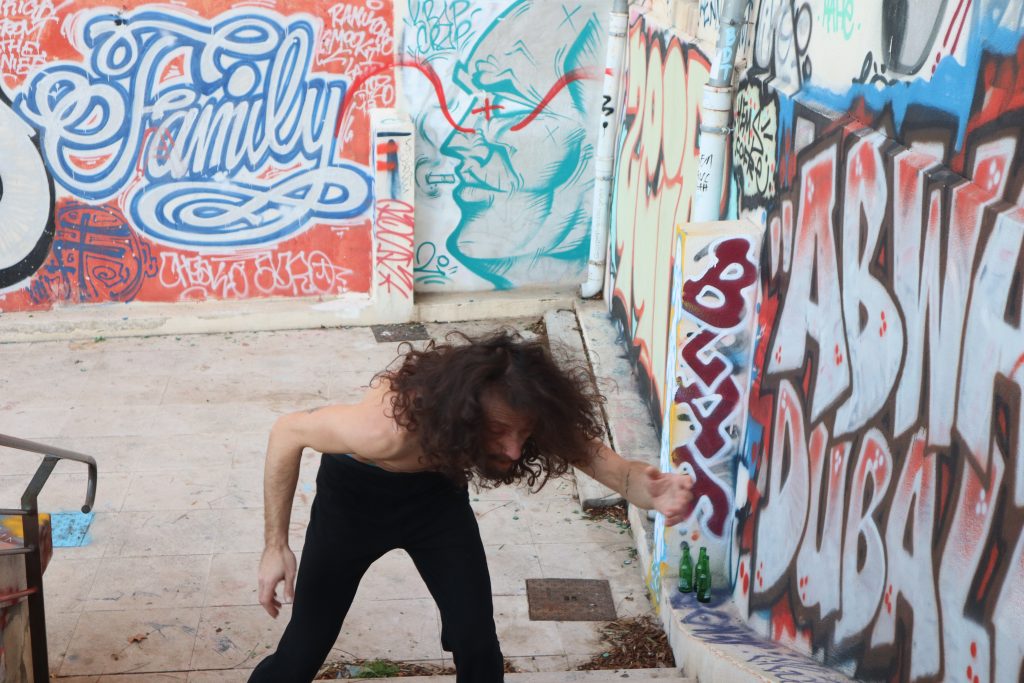
2.00 pm 2.45 pm : Melissa Moralli, She is a sociologist and lecturer in the Department of Sociology and Economic Law at the University of Bologna, and an associate researcher at Mesopolhis (Aix-Marseille University).
Title of speech : Decolonising language in social research? Artivism, creative methods and epistemic justice
Summary :
This paper opens with a reflection on artivism as an aesthetic practice of subversion, capable of revealing the mechanisms of the coloniality of knowledge and disrupting the interpretative frameworks that define what can be seen, named and recognised as legitimate knowledge. Drawing in particular on research into migration and socio-environmental injustices, the presentation analyses whether and how artivism can act as a counter-hegemonic space in which language, representations and political imaginaries are reconfigured. The paper then focuses on the creative methods used in social research. While these approaches open up spaces for co-creation that are likely to enhance marginalised knowledge, they also require a critical eye. Creative methods do not automatically dissolve hierarchies between experts and participants; they can even reproduce logics of cognitive extraction if they are not accompanied by epistemic vigilance. Through this cross-reading of artivism and creative methods, the presentation will show how these practices can support, but also put to the test, the construction of epistemic partnerships and the emergence of alternative imaginaries in the face of contemporary socio-ecological challenges.
2.45pm - 3pm: Discussion by Sarah Andrieu, anthropologist, research professor at URMIS -University of Nice.
3.00 pm - 3.30 pm: discussion with the audience
***
15h30 - 16h15 : Micol Pizzolati, She is a sociologist and associate professor of sociology at the University of Bergamo, in the Department of Literature, Philosophy and Communication.
Title of speech: « Searching in the shards: using collage to see differently "
Summary:
The aim of the presentation is to look at collage as a way of searching for fragments: visual fragments, words and sensitive traces. Based on the collages prepared in advance by the participants (see below*), we will explore what these assemblages reveal, the shifts they allow and the ways in which they can fuel research questions. We will also take the time to consider the gestures, choices and ethical considerations involved in collecting, selecting and shaping visual materials. These discussions will help us to identify avenues and lessons to be learned about the potential of collage as a method for social research: a practice that welcomes fragments, makes unexpected relationships visible and supports other ways of thinking about both experiences and emotions.

*The instructions given to participants (on prior registration) of this exchange with Micol Pizzolati:
As part of the seminar, I invite you to prepare a collage on paper in advance of the meeting, based on your current research. The collage can be made freely, adding small materials to cut-outs of any kind. A simple A4 format is fine, but other formats are also possible if you wish. I would ask you to bring the collage to the seminar in material form, if possible.
4.15pm - 4.30pm: Discussion by Appoline Haquet, a sociologist and doctoral student at MESOPOLHIS.
16:30-17:00: Discussion with the audience.
Bibliography related to the session :
- Melissa Moralli, Introduction to the Elgar Encyclopedia of GlobalMigration : New Mobilities and Artivism in Laura Oaso, Natalia Ribas-Mateos, and Melissa Moralli - 9781035300389Downloaded from https://www.elgaronline.com
- Melissa Moralli, Arts-Based Methods in Migration Research, A Methodological Analysis on Participatory, Visual Methods and Their Transformative Potentials and Limits in Studying Human Mobility, https://journals.sagepub.com/doi/10.1177/16094069241254008?icid=int.sj-abstract.citing-articles.7
- Melissa Moralli, Research as care: Positionality and reflexivity in qualitative migration research, https://journals.sagepub.com/doi/abs/10.1177/14687941231176946
- Pizzolati M., Giorgi A. (2026, in preparation), Suspended Time, Reconfigured Futures: Artists’ Emotional Narratives in Collage-Based Interviews, in S. Aboim, A. Hilário, C. Pussetti, V. Ferreira (eds), Vulnerabilities across the Life Course: transitions and crises, Spinger
- Pizzolati, M. (2025). Collage and migration, in L. Oso, N. Ribas-Mateos, in M. Moralli (eds) Elgar Encyclopedia of Global Migration, Edward Elgar Publishing, pp. 129-132
- Pizzolati, M. (2021). Creativi e collaborativi. Racconto digitale, teatro partecipativo e collage come metodi per lo studio delle esperienze biografiche di migrazione. Polis, 36(3), 467-480.
- Giorgi, A., Pizzolati, M., & Vacchelli, E. (2021). Metodi creativi per la ricerca sociale. Contesto, pratiche e strumenti, il Mulino. - Chapter V. Artefatti: doing things with your hands
- Pizzolati M. (2025), A Truly wonderful origami fox: Collage-making around ‘The story of animals and me’ to explore how a research question can be felt through, in Nind, M., Shanks, R., Lee, Y. and Edson Ferrie, J. (eds) Sparking ‘aha’ moments: A resource for teaching research methods. National Centre for Research Methods. Sparking ‘aha’ moments: A resource for teaching research methods, https://eprints.soton.ac.uk/507343/1/Sparking_Aha_Moments.pdf
See more